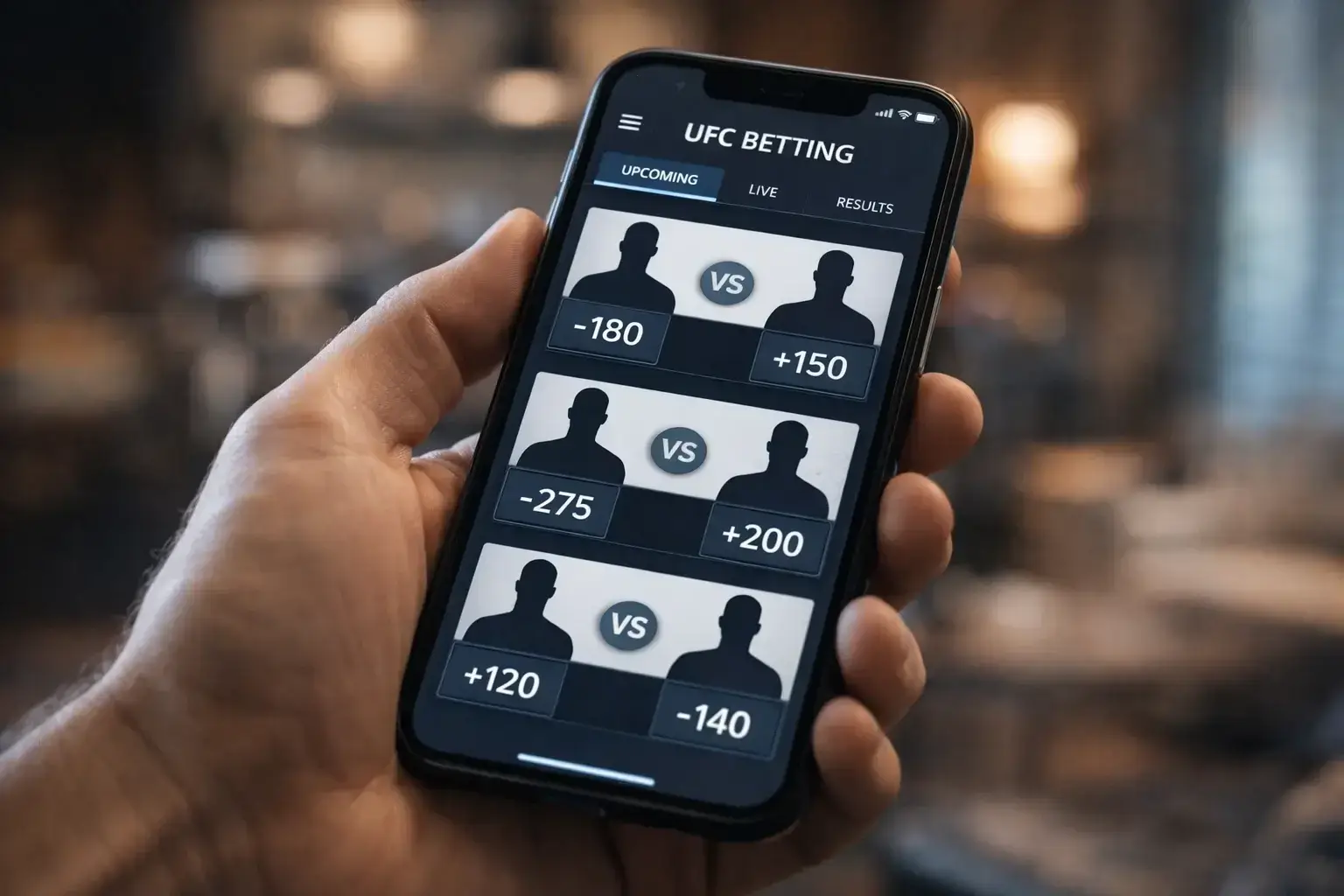
UK UFC Betting Types: Moneyline Odds and Prop Markets
 Available in US

The UFC has evolved from underground spectacle to mainstream sporting phenomenon, and the betting markets have matured right alongside it. While a casual fan might walk into a sportsbook knowing only that they want to bet on their favorite fighter, the reality is far more complex and interesting. UFC betting offers a dizzying array of wagering options, each with its own risk profile, strategic considerations, and potential rewards. Once you understand the different markets, you can start following expert UFC betting picks and predictions to find value on the weekly fight cards.
Understanding the full spectrum of UFC bet types separates recreational bettors from those who approach mixed martial arts wagering with genuine intent to profit. A moneyline bet on the favorite might seem straightforward, but what happens when you can combine it with a method of victory prop at better odds? What if the over/under on rounds offers superior value to picking the outright winner? These are the questions that make UFC betting both intellectually stimulating and potentially lucrative.
This guide breaks down every significant betting market available for UFC events. Whether you are new to combat sports wagering or looking to expand beyond basic winner picks, what follows will equip you with the knowledge to approach UFC betting with confidence and strategy.
Moneyline Bets: Pricing the Outright UFC Fight Winner
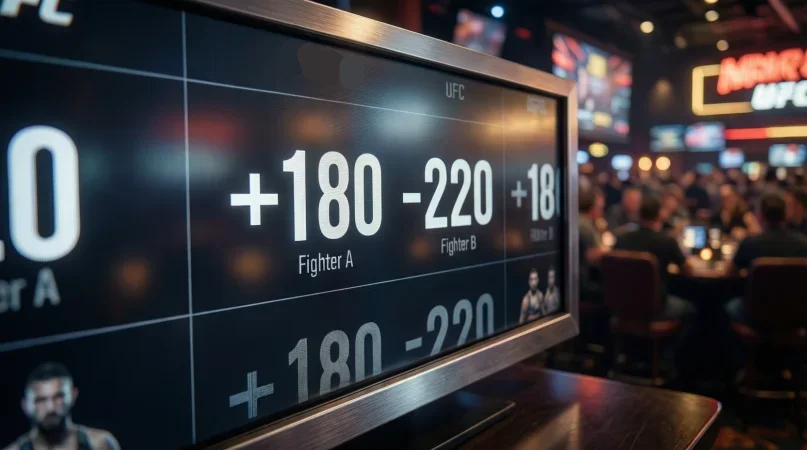
The moneyline represents the purest form of UFC wagering: pick the winner, collect your money if they get their hand raised. Every other bet type builds upon this fundamental market, which is why understanding its mechanics matters so much.
American odds format dominates UFC betting in regulated markets. A negative number indicates the favorite, showing how much you must risk to profit one hundred dollars. A positive number marks the underdog, displaying potential profit on a hundred-dollar wager. When you see Islam Makhachev listed at -350 against an opponent at +280, the numbers tell a story: Makhachev needs to win for your $350 stake to return $100 profit, while a hundred-dollar bet on his opponent yields $280 if the underdog prevails.
The math extends beyond simple profit calculations. Implied probability lurks within every odds listing, revealing what the market believes about each fighter’s chances. Converting -350 to probability gives approximately 77.8%, while +280 translates to roughly 26.3%. Notice these figures add to more than 100%—that difference represents the sportsbook’s margin, the vig or juice that ensures the house maintains its edge regardless of outcome.
Pick’em fights represent a special category where oddsmakers see the matchup as essentially even. You might encounter both fighters listed around -110 or -115, meaning neither holds significant favoritism. These contests often feature closely matched opponents or stylistic puzzles that defy easy prediction. For bettors, pick’em situations eliminate the need to lay significant juice on favorites while still offering straightforward winner-take-all propositions.
Moneyline betting carries distinct advantages and limitations worth acknowledging. On the positive side, you only need your fighter to win—method and timing become irrelevant. A controversial split decision pays the same as a first-round knockout. The simplicity appeals to those who trust their ability to identify winners without predicting specific outcomes.
However, heavy favorites create mathematical challenges. Laying -400 or worse means risking substantial sums for modest returns, and a single upset can devastate a betting bankroll. The UFC produces enough chaos that backing prohibitive favorites consistently proves difficult. Fighters get caught, referees make questionable stoppages, and the unpredictable nature of combat sports makes extreme chalk inherently risky.
Smart moneyline bettors develop frameworks for determining acceptable price points. Some refuse to lay more than -200 regardless of the matchup. Others focus exclusively on underdog plays, reasoning that the occasional big payout compensates for a lower win rate. Neither approach guarantees success, but both represent coherent philosophies superior to random selection or pure favorite backing.
Over/Under Rounds Mastery
Totals betting in UFC operates differently than team sports, where points accumulate throughout a contest. Here, the over/under refers to how many complete rounds the fight will last before a finish occurs. A fight going the distance exceeds any total, while early stoppages fall under lower numbers.
Standard UFC fights span three five-minute rounds, with championship and main event bouts extended to five rounds. Sportsbooks typically set totals at 1.5 or 2.5 rounds for three-round fights, while five-round affairs feature 2.5, 3.5, or 4.5 round lines. Understanding what these numbers mean in practice is essential before placing a wager.
A 1.5 round total requires the fight to end within the first ten minutes for the under to cash. Any result beyond the midpoint of round two means the over wins. This line typically appears when two heavy hitters with questionable durability meet, or when a massive skill disparity suggests a quick finish. The 2.5 line, more common in competitive matchups, asks whether the fight will see a third round. Taking the under means betting on a first or second-round finish, while the over covers decisions and late stoppages.
Several factors influence how oddsmakers set these lines and where value might exist. Fighter finishing rates provide the most obvious starting point—knockout artists with 80% stoppage rates in their last five fights naturally draw lower totals than grinding decision machines. But surface-level statistics can mislead without context. A fighter might have numerous finishes against regional competition that disappear against UFC-caliber opponents with better defensive skills.
Style matchups matter enormously for totals betting. Two wrestlers who prefer control-based gameplans rarely produce early finishes, even if both have occasional submission victories on their records. Conversely, two aggressive strikers with suspect takedown defense often create firefights that end abruptly. The question becomes whether the fighters will engage in ways that create finishing opportunities or settle into strategic battles that reach the scorecards.
Cardio concerns add another dimension. Fighters known to fade in later rounds become over candidates when facing opponents with the durability to survive early adversity. If a knockout artist has shown tendencies to wilt after expending energy on failed finishing attempts, betting the over exploits this pattern—assuming the opponent can weather the storm.
Championship rounds introduce unique dynamics for five-round totals. Many fighters have never experienced twenty-five minutes of cage time before their first title shot. Mental and physical preparation for extended battles differs substantially from three-round camp preparation. When a proven finisher faces a durable champion in their first five-round assignment, totals betting often offers better value than picking a side.
Method of Victory Strategies
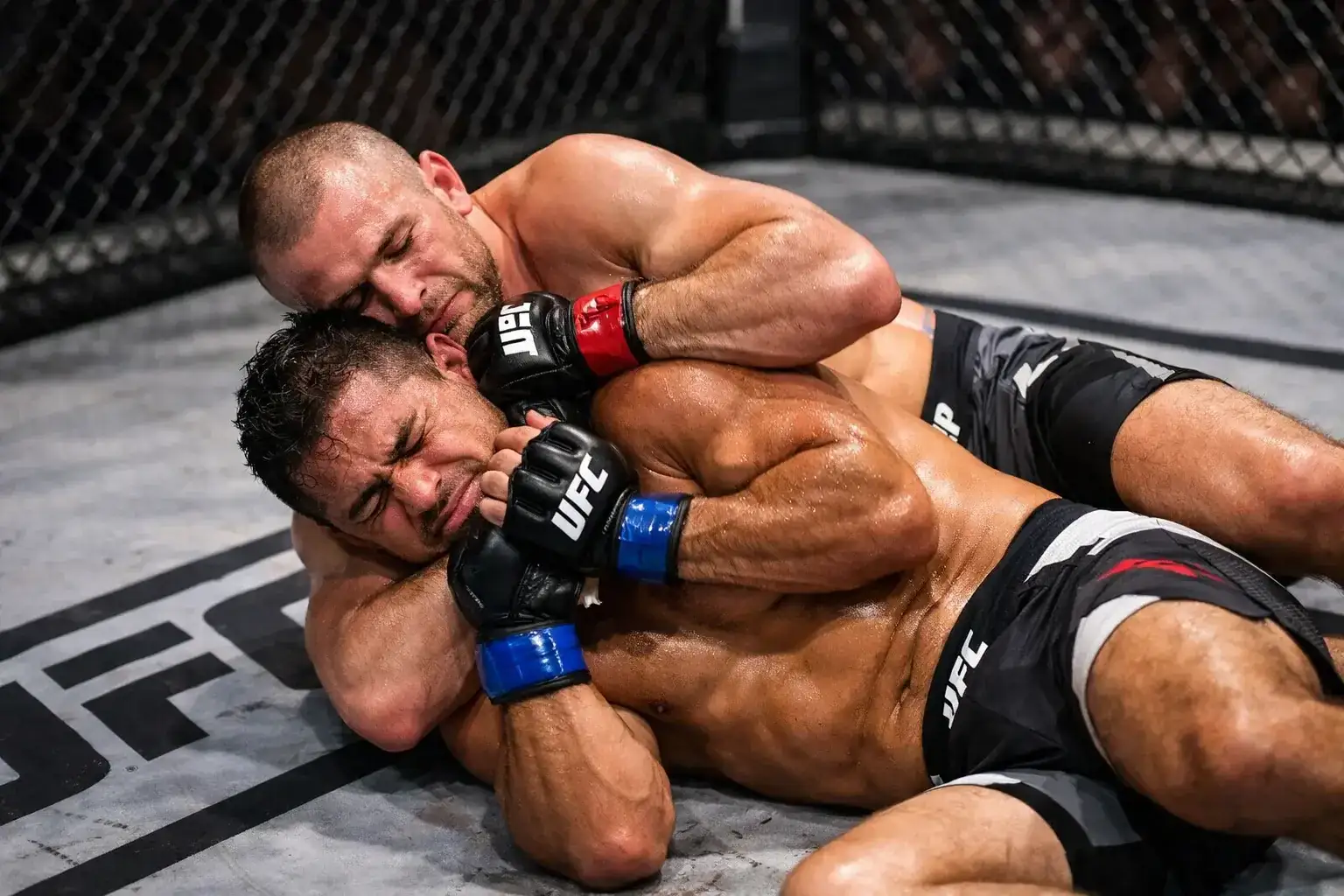
Method of victory betting asks not just who wins but how they win. The three primary outcomes—knockout/technical knockout, submission, and decision—each carry distinct odds reflecting both fighter tendencies and stylistic matchup expectations.
KO/TKO betting encompasses all stoppage victories resulting from strikes, including referee interventions when a fighter cannot intelligently defend. This category attracts significant action because knockouts represent the sport’s most dramatic conclusions. However, the market often overvalues knockout potential for popular strikers while underestimating submission threats from elite grapplers.
Analyzing knockout potential requires examining multiple variables. Pure power provides the obvious starting point, but accuracy and timing matter more than raw concussive ability. A fighter might possess one-punch knockout power but struggle to land cleanly against defensive opponents. Conversely, volume strikers can accumulate damage leading to TKO stoppages without spectacular single-shot finishes.
Submission betting rewards understanding of grappling dynamics and ground fighting capabilities. Elite submission artists like Charles Oliveira or Islam Makhachev command respect in these markets, but value often appears when lesser-known grapplers face opponents with exploitable defensive holes. A fighter with weak submission defense facing even a moderate threat on the mat can create overlay situations where submission odds exceed true probability.
Decision betting becomes attractive when two durable fighters with low finishing rates meet. Not every UFC fight produces a stoppage, and some stylistic matchups almost guarantee a judges’ verdict. Wrestling-heavy fighters who score takedowns without pursuing finishes, defensive strikers content to outpoint opponents, and matchups between two individuals with proven durability all warrant serious decision consideration.
Double chance betting, where available, combines two methods into single wagers. Betting KO/TKO or Decision covers everything except submissions, useful when facing an opponent with genuine knockout power but minimal grappling threat. Submission or Decision wagers work when a grappler faces someone unlikely to score a knockout. These combination bets reduce variance while still offering reasonable returns compared to outright method selections.
The interplay between method of victory and round betting creates additional strategic options. If you believe a fighter wins by knockout, specifying early rounds typically offers better prices than late-round KO, assuming their power represents their primary path to victory. Grapplers often need time to implement submissions, making second or third-round submission bets potentially superior to first-round selections.
Context around each fighter’s recent performances shapes method expectations. A knockout artist coming off two decision victories might be undervalued in KO markets as recency bias affects odds. Similarly, a grappler who secured a surprising knockout might see inflated KO odds despite their historical submission dominance. Recognizing when odds drift from underlying tendencies creates method of victory value.
Round Betting Tactics
Round betting represents the most precise and potentially lucrative form of UFC wagering. Instead of merely predicting a winner or finish method, you specify exactly when the fight ends. The difficulty of such predictions explains why round betting offers the highest potential payouts among standard UFC markets.
Exact round betting requires nominating both the winner and the specific round of victory. Picking Fighter A to win in round two means the fight must end during that five-minute period with your selected fighter getting the stoppage. A first-round knockout or third-round submission—even by your chosen fighter—loses the wager. This precision explains why odds of +500 to +1500 commonly appear even for likely winners.
The key to round betting lies in understanding fighter patterns and finish timing tendencies. Some knockout artists consistently finish opponents within the first five minutes, their explosive approach either succeeding immediately or leaving them vulnerable as the fight progresses. Others build toward finishes, using early rounds to establish range and timing before loading up in later frames. Studying when a fighter typically secures victories reveals where round betting value might exist.
Round group betting relaxes the precision requirements while still offering enhanced odds over basic moneyline wagers. Common groupings include rounds 1-2, rounds 2-3, or rounds 3-5 in championship fights. These markets acknowledge that predicting exact finish timing proves extremely difficult while still rewarding bettors who correctly identify general timeframes for stoppages.
Combining round betting with method of victory creates the most specific predictions available. Fighter A by KO/TKO in round one pays substantially more than either component separately, compensating for the increased difficulty. These combination bets make sense when you hold strong convictions about both how and when a fight will end—perhaps a knockout artist facing an opponent with known durability issues who historically absorbs significant damage in opening rounds.
Three-round versus five-round dynamics significantly impact round betting strategy. In standard fights, first-round finishes require immediate aggression and capitalization on opportunities. Championship and main event fights offer more time for finishes to develop, spreading probability across additional rounds and often softening exact round odds accordingly. A fighter who typically finishes in round three of their regular bouts might need until round four or five when facing championship-caliber opposition in extended formats.
Prop Bets Exploration

Proposition bets extend UFC wagering beyond fight outcomes into specific occurrences within contests. These markets range from straightforward questions to exotic propositions that add entertainment value regardless of competitive analysis.
The go the distance prop asks simply whether the fight reaches a judges’ decision. Unlike totals betting with its round-by-round calculations, this market presents a binary outcome: stoppage or decision. Odds reflect combined finishing probabilities of both fighters, making this prop particularly relevant when two durable competitors with low stoppage rates meet. Historical context matters—if both fighters have gone to decision in their last three appearances each, the go the distance yes becomes a reasonable consideration regardless of stylistic factors.
Fight to start round X propositions wager on whether the contest remains ongoing at specific points. Will the fight start round three? Will it reach championship rounds? These props function similarly to totals but frame the question differently, sometimes offering arbitrage opportunities when totals and round props show inconsistent pricing.
Time of finish props break fights into time segments, typically asking whether any stoppage occurs before or after specific timestamps. Will the fight end before 2:30 of round one? These ultra-specific markets attract small stakes from bettors with strong convictions about early finish likelihood but prove extremely difficult to predict consistently.
Fighter-specific props vary based on matchup and sportsbook creativity. Common offerings include whether a fighter will record a knockdown, attempt a takedown, or land a certain number of significant strikes. These props reward deep statistical knowledge—understanding that Fighter A averages 2.3 knockdowns per fifteen minutes while facing an opponent who has been dropped in four consecutive fights creates actionable intelligence for knockdown props.
Exotic props emerge around major events, particularly numbered UFC pay-per-views with championship implications. Will there be a doctor stoppage? How many fights on the card will go to decision? These entertainment-focused markets offer limited analytical edges but add engagement for viewers seeking additional action throughout lengthy cards.
The challenge with prop betting lies in finding markets where your knowledge exceeds what oddsmakers have already priced in. Fighter statistics exist publicly, meaning basic statistical props often reflect accurate probabilities. Edge appears in contextual analysis—understanding how specific matchups affect usual statistical outputs, recognizing when fighters deviate from historical patterns, and identifying props where public perception differs from underlying probability.
Prop betting works best as a complement to core position plays rather than a primary strategy. Using props to hedge main positions, add correlated exposure to existing views, or express opinions the standard markets do not accommodate represents sound practice. Treating prop markets as independent gambling opportunities without connection to overall fight analysis typically produces poor long-term results.
Parlay Building for UFC
Parlays combine multiple selections into single wagers where all components must win for the bet to cash. The appeal is obvious: modest stakes can return substantial payouts when several correct predictions align. The risk is equally clear—one wrong pick invalidates the entire ticket regardless of how many selections proved correct.
Same-game parlays within individual UFC fights have gained popularity as sportsbooks expand their offerings. Combining a moneyline pick with an over/under selection on the same fight creates correlated outcomes that pricing attempts to account for. If you believe Fighter A wins by knockout, taking Fighter A moneyline plus the under on rounds represents a logical combination. Sportsbooks reduce potential payouts on correlated parlays compared to independent events, but opportunities still exist when your fight analysis suggests multiple related outcomes.
The mathematics of same-game parlays deserve scrutiny. Combining Fighter A at -200 with under 2.5 rounds might seem appealing, but the conditional probability changes once you account for correlation. Fighter A winning by early knockout satisfies both conditions, but Fighter A winning by decision means the under loses. Understanding these relationships helps identify which same-game combinations offer genuine value versus those that merely multiply odds without corresponding edge.
Multi-fight parlays across entire UFC cards present different strategic considerations. Independence between fights means mathematical combination works straightforwardly—multiply the odds together for potential payout calculation. The practical challenge lies in maintaining confidence across numerous selections when any single upset destroys the ticket.
Conservative parlay building limits selections to two or three fights where conviction remains highest. Adding marginal picks to chase larger payouts typically backfires as cumulative probability of at least one loss increases dramatically with each addition. A three-fight parlay with 60% confidence in each selection yields only 21.6% overall probability of success. Adding a fourth similarly confident pick drops that to 13%.
Risk management in parlays involves position sizing appropriate to their speculative nature. Bankroll management principles suggest limiting parlay exposure to small percentages of total funds, treating these wagers as high-variance entertainment rather than foundational strategy. The occasional big score should not mask the mathematical reality that parlays carry substantial house edges compared to individual wagers.
Round robin betting offers parlay risk mitigation by creating multiple smaller combination tickets from a selection pool. Choosing four fighters and betting all possible three-team parlays produces four separate tickets, allowing one loss while maintaining winning potential on remaining combinations. This approach reduces variance compared to straight four-team parlays while sacrificing maximum upside for increased probability of returns.
Futures and Specials

Futures betting extends UFC wagering horizons beyond individual events to championship implications and long-term predictions. These markets offer substantial payouts for correctly anticipating developments months in advance, though they require capital to remain locked up until outcomes resolve.
Championship futures allow betting on which fighter will hold specific divisional titles at designated future dates. Wagering on a contender to become champion before their title shot materializes can capture significant value if odds shift favorably as they win interim fights. The risk involves career-altering injuries, unexpected losses, or promotional decisions that derail title aspirations.
Fighter of the year markets and similar seasonal futures provide exposure to overall performance rather than individual fight outcomes. These bets typically resolve after twelve-month periods, requiring assessment of schedule strength, potential for spectacular performances, and likelihood of avoiding defeats that would eliminate candidacy.
Event-specific futures appear around major cards with multiple significant matchups. Betting on which fight wins performance bonus awards or whether any title changes hands on a championship-heavy pay-per-view adds engagement across entire events rather than individual contests.
The opportunity cost of futures betting deserves consideration. Capital committed to a championship future cannot fund interim opportunities as they arise. If your championship pick at +600 requires six months to resolve while numerous profitable individual fight bets present themselves during that period, the futures position must offer sufficient expected value to justify foregone opportunities.
Tournament futures when applicable—typically involving international events or special formats—create unique betting circumstances. Bracket-style predictions reward understanding of potential matchup paths rather than just individual fight analysis.
Conclusion
UFC betting offers far more than picking winners. From precise round predictions to creative prop combinations, the depth of available markets allows sophisticated bettors to express nuanced fight analysis through targeted wagers. Moneyline bets provide foundational positions, totals and method of victory expand strategic options, and prop markets reward deep contextual knowledge.
Success requires matching bet types to your analytical strengths. If you excel at predicting how fights unfold stylistically, method of victory and totals markets translate that insight into wagering opportunities. If identifying likely winners without predicting specifics proves more reliable, moneyline focus with selective parlay additions might suit your approach. Always ensure you are getting the best odds by consulting the top MMA betting platform for the latest lines and market movements.
The variety of UFC bet types means no single strategy dominates. Understanding each market’s risk-reward profile, knowing when different bet types offer value, and maintaining discipline in selection and stake sizing together create sustainable approaches to MMA wagering.
Prepared by the ufc Betting editorial staff.