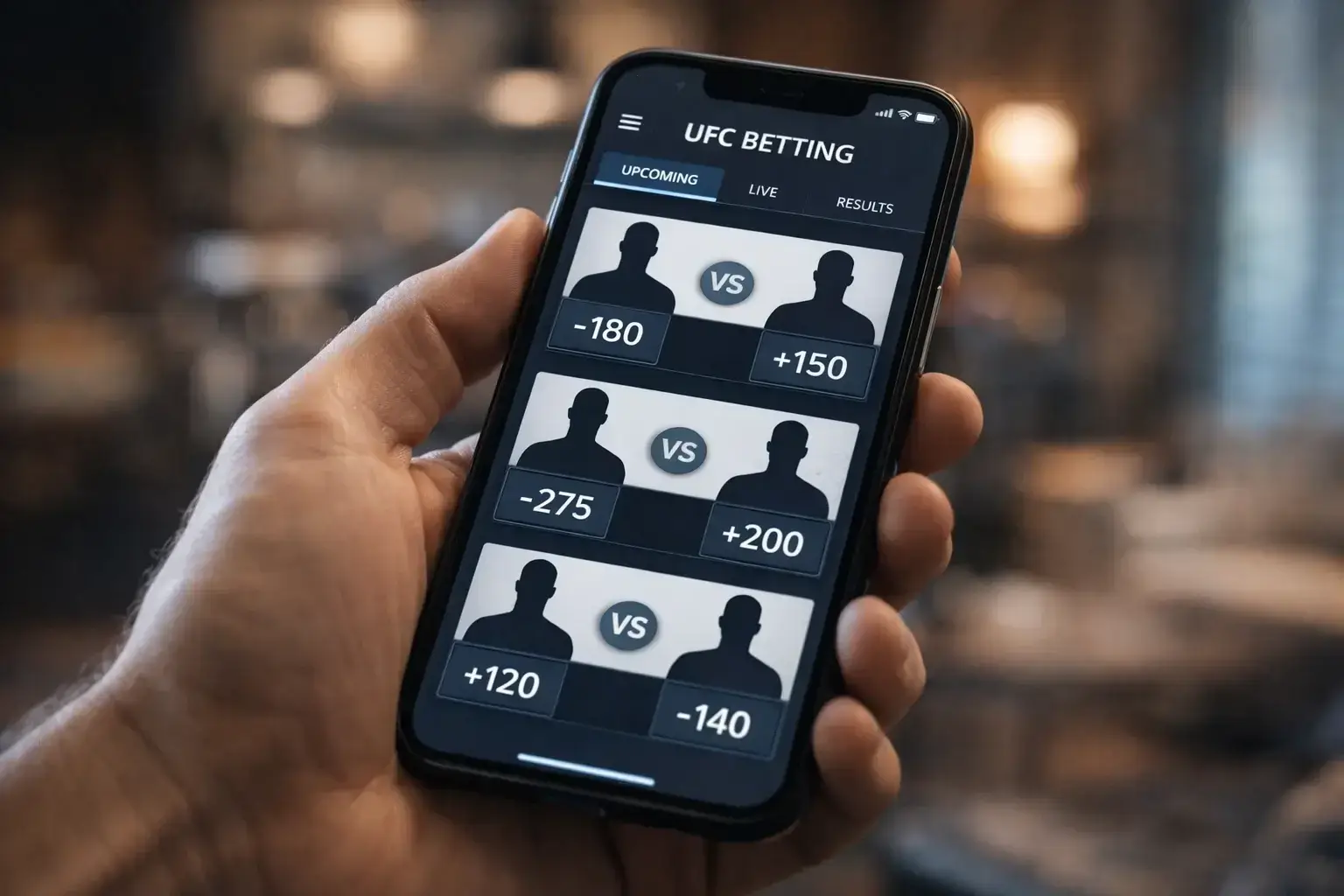
UK UFC Betting Strategies: Tactical MMA Wagering and Bankroll Systems
 Available in US

Making money betting on UFC fights sounds straightforward enough—pick winners, collect cash. The reality proves considerably more humbling. Sportsbooks employ teams of analysts, access mountains of data, and set lines designed to extract money from both casual fans and serious bettors alike. Beating these markets consistently requires more than enthusiasm for the sport and familiarity with fighter names. To implement these tactics effectively, you must first learn how to analyze UFC fighters and evaluate their stylistic matchups inside the octagon.
Sharp bettors—those who actually profit long-term—approach UFC wagering as a discipline requiring systematic research, emotional control, and mathematical rigor. They understand that watching every card and following MMA media does not automatically translate into betting edge. Entertainment value and wagering value exist independently, and confusing the two leads to empty bankrolls.
What separates profitable UFC bettors from the masses comes down to process rather than prediction accuracy alone. Winners develop frameworks for evaluating fights, maintain strict bankroll discipline, exploit market inefficiencies, and recognize when to stay on the sidelines. This guide breaks down the strategies that sharp bettors employ, from fundamental research approaches to advanced concepts like value identification and live betting tactics.
Evaluating Fighter Statistics for Direct Betting Value
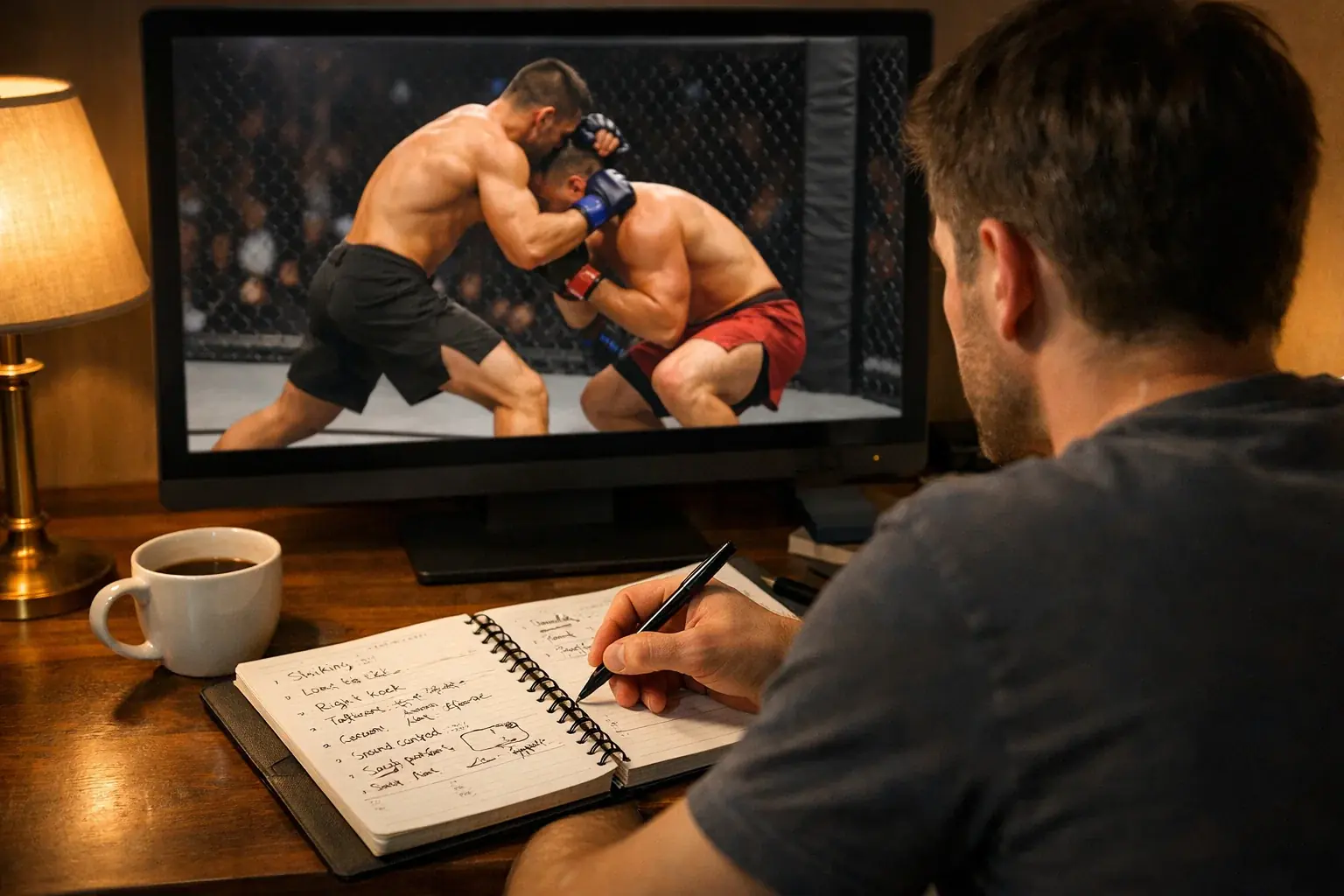
Successful UFC betting begins long before lines release. Sharp bettors maintain ongoing awareness of the fighter landscape, tracking developments that inform future wagering decisions. This continuous research provides context that proves invaluable when analyzing specific matchups.
The essential pre-fight research checklist starts with recent performance analysis. Reviewing the last three to five fights for each competitor reveals current form, stylistic evolution, and any concerning patterns. A fighter who dominated three years ago but has dropped consecutive decisions presents a different proposition than their historical reputation suggests. Recency matters in combat sports where physical decline happens quickly and style adjustments can transform effectiveness.
Fighter information flows through multiple channels, each offering distinct value. Official UFC statistics provide quantitative foundations—striking accuracy, takedown defense, significant strike differentials. However, numbers without context mislead, which is why supplementing statistical analysis with qualitative observations from actual fight footage matters. Watching how a fighter responds to adversity, observing their between-round composure, and noting whether they fight to their corner’s instructions reveals information that spreadsheets cannot capture.
Training camp intelligence represents perhaps the most underutilized information source available to bettors. Fighters prepare at specific gyms with identifiable coaching philosophies. Understanding that a competitor trains at a wrestling-heavy camp suggests likely tactical approaches. Changes in training locations often signal strategy shifts—a striker moving to a grappling-focused gym before fighting a wrestler indicates specific preparation worth noting.
Social media and MMA news monitoring surfaces information that moves betting lines. Injury reports, weight cut struggles, training camp footage showing diminished speed or power, personal life disruptions affecting focus—all of these factors influence fight outcomes and occasionally become public before oddsmakers fully account for them. The goal is not insider information but rather comprehensive awareness of publicly available developments.
Building information networks enhances research capabilities. Following coaches, training partners, and MMA journalists on social platforms creates feeds of relevant updates. Participating in knowledgeable MMA communities exposes bettors to perspectives and observations they might otherwise miss. Crowdsourced analysis supplements individual research without replacing the critical evaluation that distinguishes useful information from speculation.
The research phase should produce clear hypotheses about how fights will unfold. Rather than simply picking winners, articulate expected patterns: which fighter dictates range, where the fight will take place positionally, how pace and cardio will factor into later rounds. These hypotheses guide bet selection and create frameworks for evaluating whether odds accurately reflect fight dynamics.
Time investment in research correlates with betting success, but efficiency matters. Spending forty hours analyzing a preliminary card does not proportionally increase edge compared to focused research on main card contests where betting markets show more liquidity and significance. Prioritize research depth on fights where you intend to wager meaningfully rather than spreading attention thinly across entire cards.
Documentation of research findings creates accountability and enables improvement. Recording pre-fight analysis allows post-fight review of what you correctly anticipated versus what surprised you. Patterns in analytical failures highlight blind spots requiring attention. Without documentation, the same mistakes repeat indefinitely because memory selectively recalls successes while forgetting failures.
Style Matchup Analysis
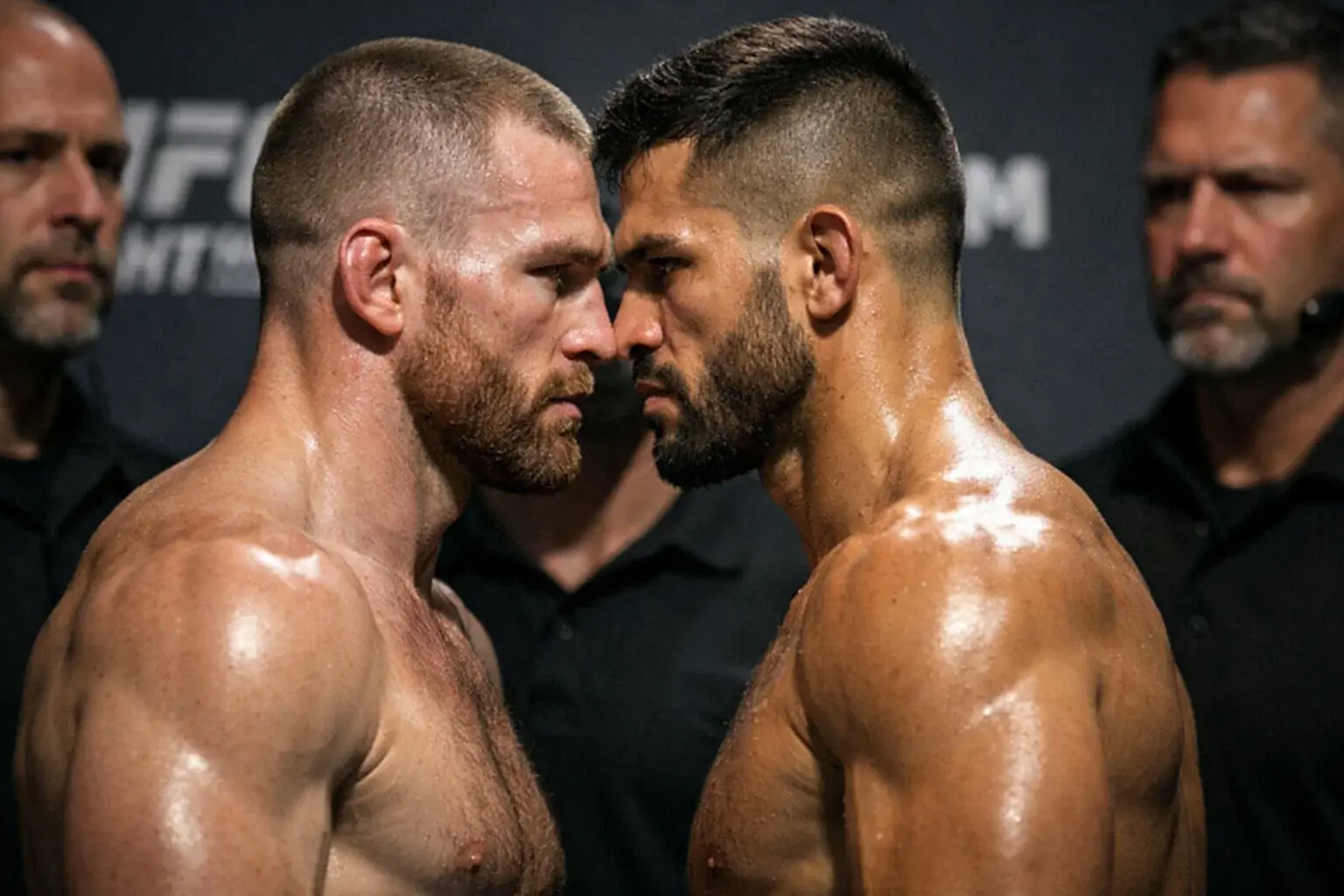
The oldest adage in combat sports holds that styles make fights. Two fighters with identical records can produce wildly different outcomes depending on how their specific skill sets interact. Sharp bettors invest heavily in understanding these dynamics because style matchup analysis frequently reveals value that aggregate statistics obscure.
The striker versus grappler framework provides foundational matchup analysis. When an elite striker faces a dominant wrestler, several questions determine likely outcomes. Can the striker maintain distance and punish takedown attempts? Does the grappler possess the durability to absorb strikes while closing distance? What happens if the fight reaches the ground—does the striker have escape ability, or does the grappler achieve dominant positions and inflict damage? Each question has betting implications depending on how confidently you can answer it.
Southpaw advantages create subtle but significant edges in certain matchups. Orthodox fighters face southpaws far less frequently in training, leading to unfamiliarity with angles and timing that experienced southpaws exploit. The lead foot positioning battle between opposite-stance fighters creates different dynamics than orthodox versus orthodox engagements. When a skilled southpaw faces an orthodox fighter without significant opposite-stance experience, stylistic edge exists independent of overall skill levels.
Reach and height considerations matter most in striking-focused matchups. A significant reach advantage allows fighters to strike effectively from distances where shorter-armed opponents cannot counter. However, reach advantages diminish substantially once fights enter grappling range. A reach-advantaged striker facing a pressure grappler must keep the fight at distance to realize their physical edge—if they cannot, the advantage becomes irrelevant.
Pace and cardio matchups determine how fights evolve through later rounds. High-output fighters who overwhelm opponents early may fade against durable competitors capable of weathering early storms. Conversely, slow starters who finish strong create over betting opportunities when facing opponents who cannot sustain early advantages. Understanding each fighter’s typical output patterns and cardio trajectories reveals how fights likely unfold temporally.
Pressure fighters versus counter strikers present classic stylistic tensions. Aggressive forward movement creates the exchanges counter strikers need, but pressure can overwhelm reactive fighters who require space to operate. The key question becomes whether the counter striker can discourage aggression with punishment or whether the pressure fighter can push through to create sustained exchanges favoring volume over precision.
Wrestling credentials require nuanced evaluation. Not all wrestlers translate effectively to MMA, and defensive wrestling differs substantially from offensive wrestling ability. A fighter might stuff takedowns excellently but lack ability to secure their own when needed, or might take opponents down consistently without possessing ground control to capitalize. Disaggregating wrestling components prevents overly simplistic assessments based on credential alone.
Advanced Statistics Usage
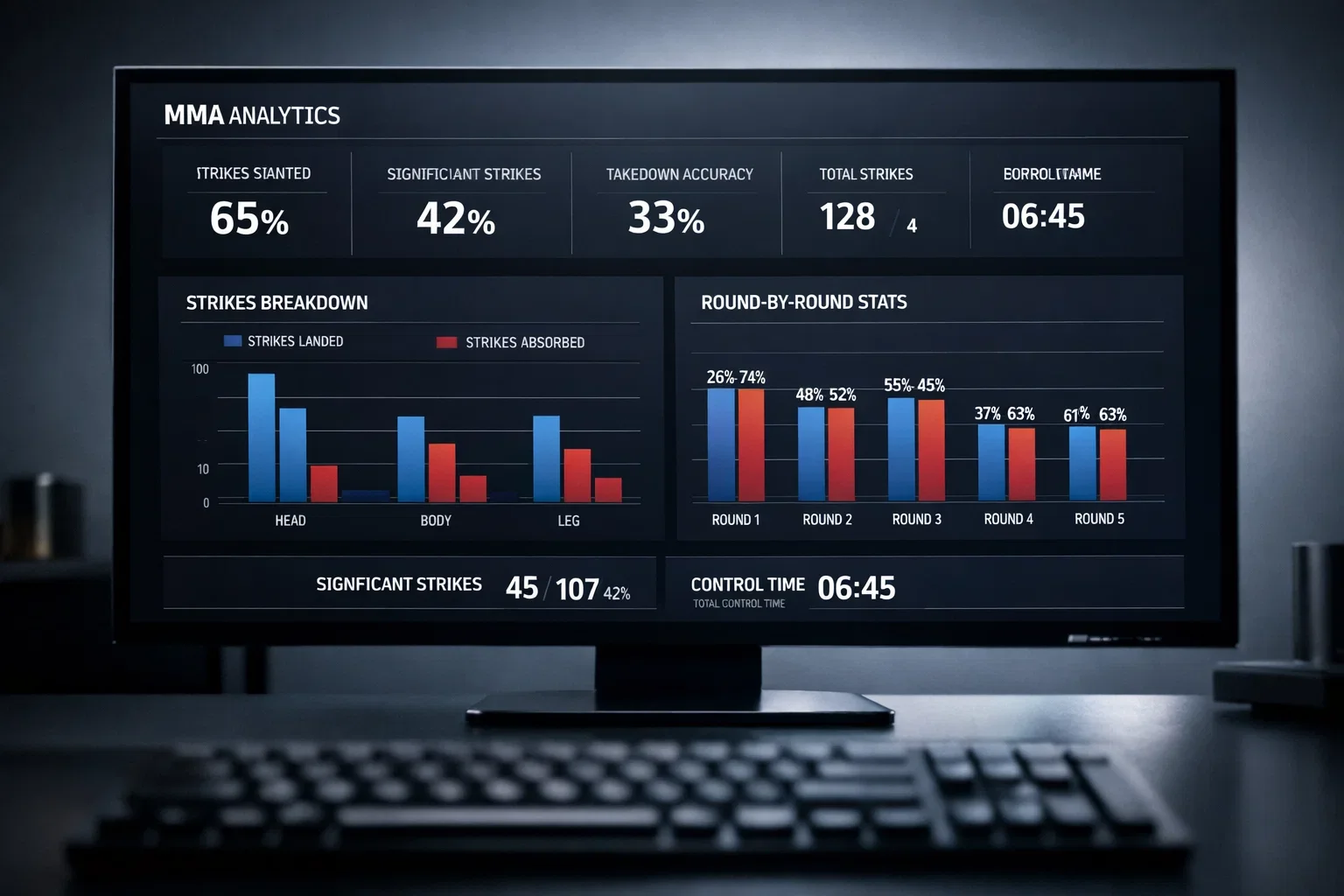
Statistics provide essential foundations for UFC analysis, but their effective use requires understanding both value and limitations. Sharp bettors develop statistical literacy that extracts genuine insight while avoiding the traps that numbers can create.
Key statistics worth tracking include striking accuracy and differential, takedown accuracy and defense, significant strikes landed and absorbed per minute, and control time metrics. These numbers create quantitative pictures of fighter capabilities that supplement qualitative film study. However, aggregate career statistics can mislead when recent performance diverges from historical patterns.
UFCStats.com provides the most comprehensive publicly available fighter statistics, offering detailed breakdowns by fight and career aggregations. Learning to navigate this resource efficiently—filtering by recent fights, comparing specific matchups against relevant competition—distinguishes sophisticated from casual statistical analysis. The site’s fight-by-fight breakdowns reveal patterns that career averages obscure, particularly for fighters whose styles have evolved significantly.
Creating personal statistical models takes analysis further. Some sharp bettors develop proprietary frameworks that weight statistics according to their analytical philosophies. These might incorporate factors like opposition quality adjustments, recency weighting, or stylistic context that standard statistics ignore. Building such models requires significant investment but can generate persistent edge when approaches differ meaningfully from consensus analysis.
The limitations of statistics deserve equal attention. Numbers cannot capture intangibles like heart, fight IQ, or ability to make real-time adjustments. Statistics reflect what happened, not why it happened or whether it will recur against different opposition. A fighter might have excellent takedown defense statistics earned against wrestlers who shot from distance but prove vulnerable against clinch-based grapplers with different approaches. Context always matters.
Small sample sizes plague UFC statistical analysis. Fighters compete two to four times annually, meaning even veterans may have only fifteen to twenty UFC fights generating statistics. Drawing conclusions from such limited data requires appropriate humility. Significant statistical differences between fighters might reflect genuine skill gaps or might represent variance that larger samples would eliminate.
Opposition quality adjustments rarely receive adequate attention. A fighter with 60% takedown defense against elite wrestlers differs meaningfully from one with the same percentage against journeymen. Contextualizing statistics against opposition level adds analytical depth, though doing so consistently requires substantial research investment to evaluate each opponent’s relevant capabilities.
Combining statistical analysis with film study produces superior understanding than either approach alone. Statistics identify patterns worth investigating; film study reveals whether those patterns reflect genuine tendencies or circumstantial factors. When numbers and observations align, confidence in conclusions increases. When they diverge, deeper investigation usually reveals which source provides more accurate insight for the specific question being addressed.
Live Betting Strategies
Live betting—wagering while fights are in progress—offers opportunities that pre-fight markets cannot replicate. Seeing how fighters actually perform against specific opponents provides information that pre-fight analysis could only estimate. Sharp bettors who develop live betting competence access unique value, though the pace and pressure of in-fight wagering create distinct challenges.
Reading fight momentum forms the foundation of live betting success. Observable factors during fights include striking effectiveness, takedown success, visible damage accumulation, apparent cardio trajectories, and corner communication. When live odds diverge from what these observations suggest, betting opportunities emerge. A fighter who lost a close first round might see their odds lengthen significantly despite showing nothing that suggests they cannot win remaining rounds. Conversely, a fighter who stole a round through late flurries might have shorter odds than their actual position warrants.
Timing decisions in live betting require quick but disciplined evaluation. Odds shift rapidly during fights, and windows of value close within seconds. Developing pre-fight contingency plans—identifying scenarios where live betting makes sense and approximate price points worth targeting—enables faster decision-making when opportunities arise. Going into a fight knowing that Fighter B at plus money becomes interesting if they survive the first round creates actionable frameworks that real-time analysis cannot build from scratch.
Common live betting patterns create both opportunities and traps. Markets often overreact to early knockdowns, assuming the dropped fighter faces imminent defeat when durability might allow recovery. Similarly, fighters winning early rounds through volume striking may see their odds shorten excessively despite cardio questions that late rounds will answer. Recognizing these patterns helps identify when live markets have overcorrected.
Managing live betting risks requires discipline that many bettors lack. The excitement of watching fights while having action creates emotional pressure to bet more frequently and at larger sizes than analysis supports. Successful live bettors maintain the same bankroll discipline they apply to pre-fight wagers, resisting the temptation to chase or revenge-bet when early positions go wrong. Pre-determined limits on live betting exposure prevent sessions from spiraling out of control.
The speed advantage in live betting favors those with optimized setups. Multiple screens allowing simultaneous fight viewing and odds monitoring, pre-logged sportsbook accounts with funded balances ready to wager, and fast decision-making processes create execution edges. When everyone sees the same opportunity, those who can act fastest capture the best prices.
Value Betting Principles

Value betting represents the conceptual foundation separating professional gambling from recreational entertainment. A value bet exists when the probability of an outcome exceeds what the odds imply, creating positive expected return regardless of individual result. Sharp bettors seek value relentlessly because only consistently positive expected value generates long-term profit.
Finding mispriced odds requires having opinions about true probabilities that differ from market implications. If you believe Fighter A wins 60% of the time but their odds imply only 50% probability, value exists on Fighter A regardless of the outcome. Building this conviction requires the research and analysis processes discussed earlier—without genuine analytical edge, you cannot consistently identify mispricings.
Line shopping across sportsbooks multiplies opportunities to capture value. The same fight at different sportsbooks might see Fighter A at -150 on one site and -130 on another. That twenty-point difference represents real money across enough bets. Maintaining accounts at multiple legal sportsbooks and checking each before wagering ensures best available prices. The inconvenience of managing multiple accounts pales against the mathematical benefit of consistently better odds.
Beating the closing line serves as the best long-term indicator of betting skill. The closing line—odds immediately before fights begin—represents the market’s most informed assessment, incorporating all late information and sharp betting action. If your bets consistently receive better prices than closing lines, you possess genuine analytical edge. Tracking whether you beat closing lines provides feedback about skill independent of short-term results, which variance can skew in either direction.
Odds movements through the week reveal market sentiment and occasionally sharp action. When lines move significantly between opening and close without obvious news explaining the shift, informed money may be driving the change. Following line movements does not automatically generate edge—by the time movements become obvious, value may have disappeared—but understanding what movements signify adds context to betting decisions.
Distinguishing entertainment bets from value bets maintains analytical honesty. Recreational bettors wager for excitement regardless of expected value. Professional approaches require betting only when value exists, even if that means skipping cards entirely when no opportunities present themselves. The discipline to pass on negative expected value wagers, no matter how entertaining the fights, separates long-term winners from those who fund sportsbook operations.
Value betting inherently involves accepting short-term losses. A bet with 55% probability still loses 45% of the time, and losing streaks occur regularly even when every bet carries positive expected value. Understanding that sound process generates results over hundreds of bets rather than individual outcomes prevents overreaction to inevitable downswings. Sharp bettors evaluate decisions based on quality of analysis rather than results of individual wagers.
Bankroll Management
Bankroll management might be the least exciting aspect of sports betting, yet it determines whether skilled bettors survive long enough for their edge to manifest. Without proper financial discipline, even sharp analysis leads to ruin when inevitable losing streaks deplete capital before recovery occurs.
Unit sizing provides the foundation of bankroll management. A unit represents your standard bet size, typically set between one and five percent of total bankroll depending on risk tolerance. Betting in units rather than variable amounts removes emotional decision-making from stake sizing—a fight you feel strongly about receives the same unit sizing as any other qualified bet rather than an inflated amount that gambling instinct might suggest.
UFC betting produces significant variance due to the sport’s unpredictable nature. Upsets occur regularly, refereeing decisions influence outcomes, and fluky finishes can swing results against fighters who were clearly winning. Building variance expectations into bankroll sizing means maintaining enough units to weather extended losing periods. A fifty-unit bankroll can survive a ten-unit downswing that would devastate someone betting fifty percent of their funds per fight.
Adjusting stakes based on confidence levels introduces controlled flexibility without abandoning discipline. Some bettors use half-unit plays for lower-confidence positions, full units for standard bets, and double units for premium spots where analysis suggests exceptional value. This framework captures conviction differences while maintaining structure. However, premium plays should remain rare—if everything feels like a double-unit opportunity, standards need recalibration.
Knowing when to increase or decrease stakes follows results and bankroll growth naturally. As bankrolls expand through winning, unit sizes can increase proportionally while maintaining the same percentage exposure. During downswings, reducing unit sizes preserves capital and extends survival. This approach keeps position sizing appropriate to current resources rather than historical peaks or future aspirations.
Long-term profitability mindset accepts that UFC betting is a marathon requiring patience and persistence. Monthly results vary wildly even for skilled bettors; quarterly assessments provide more meaningful signals, and annual reviews offer the clearest pictures of genuine performance. Bettors focused on single-night results inevitably make emotional decisions that undermine long-term edge.
Separating betting funds from living expenses maintains psychological health. Money allocated to wagering should be genuinely discretionary—funds whose loss creates inconvenience rather than hardship. Betting with rent money or emergency savings introduces pressure that corrupts decision-making and transforms entertainment into stress regardless of outcomes.
Common Mistakes to Avoid

Identifying and eliminating common errors accelerates the path to profitable betting. Many recreational bettors repeat the same mistakes indefinitely, funding sportsbooks while wondering why results disappoint. Recognizing these patterns in your own behavior enables correction.
Betting on every fight reflects entertainment-seeking rather than value-hunting. UFC cards can feature fifteen or more fights, but only a few typically offer genuine betting value. The urge to have action on every contest prioritizes engagement over profitability. Sharp bettors pass on entire cards when analysis reveals no attractive opportunities, recognizing that not betting is itself a position.
Chasing losses after bad beats leads to escalating stakes and deteriorating decision quality. The psychology is understandable—losing hurts, and winning back losses promises relief. But chasing typically compounds problems by forcing bets on marginal opportunities at inflated stakes. Maintaining consistent unit sizing regardless of recent results prevents chasing damage.
Ignoring underdogs systematically leaves value on the table. Casual bettors gravitate toward favorites, creating markets where underdog prices sometimes exceed fair value. Champions and popular fighters attract disproportionate public money, shortening their odds and lengthening opponent prices. Sharp bettors approach underdogs without bias, recognizing that plus-money prices need win less frequently to profit than minus-money favorites.
Emotional betting driven by fighter fandom, national loyalty, or personal animosity toward particular competitors clouds analytical judgment. Rooting interests belong to entertainment watching, not serious wagering. If you cannot bet against your favorite fighter when analysis suggests their opponent offers value, either skip those fights or acknowledge that emotional bias compromises objectivity.
Overreacting to single performances—whether dominant victories or devastating losses—ignores the variance inherent in combat sports. A fighter knocked out in their last bout might represent excellent value against a stylistically favorable next opponent. Conversely, a spectacular finish does not guarantee continued success against elevated competition. Evaluating performances in context rather than treating them as definitive assessments improves predictive accuracy.
Neglecting line movement and timing allows avoidable value loss. Betting at opening lines sometimes captures value that later movement eliminates. Other times, waiting for line movement reveals sharp action worth following. Paying attention to when you bet, not just what you bet, optimizes returns from sound analysis.
Conclusion
Profitable UFC betting demands more than fight knowledge and enthusiasm. The strategies that separate sharp bettors from recreational players encompass systematic research, disciplined bankroll management, value identification, and continuous self-improvement. Understanding style matchups, leveraging statistics appropriately, and exploiting live betting opportunities all contribute to sustainable edge. For a complete overview of the sport’s wagering landscape, visit our comprehensive UFC betting guide before placing your next wager.
Most importantly, approaching UFC wagering as a skill requiring development rather than entertainment incidentally producing winnings creates the mindset necessary for long-term success. The fighters entering the octagon have trained for years to compete at the highest level. Serious bettors should approach their craft with comparable dedication.
Published by the ufc Betting team.